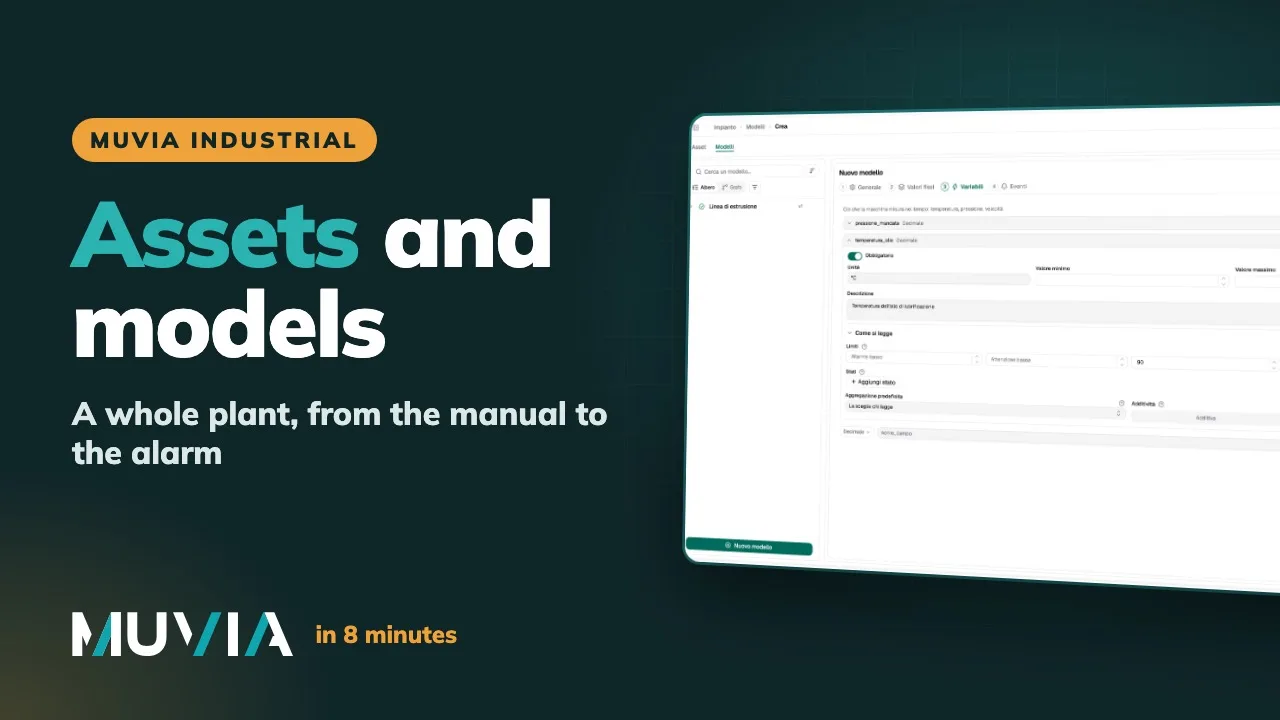
One model per kind of machine
A model says what a machine of that kind has: its variables with their units and limits, its states, its nameplate data. It is written once for the extruders, once for the compressors, and holds for every machine of that kind.
The manual becomes a model
Upload the machine's datasheet or manual and Muvia proposes the model's fields, which a person checks and corrects before saving them. It is an AI proposal, not a certain reading of the document.
From the model to the machines
Assets are made from the model: one at a time, several at once with numbered names and values, or by duplicating a whole line. Each asset sits in its place in the plant, from department to line to machine.
Linking the signals
Each of the asset's variables is linked to the signal arriving from the field. Muvia proposes the most likely link, and a person confirms it. From then on dashboards, analyses and alarms read the variable by name: if a tag changes, it is fixed here, once.
Everything about a machine
The asset's page gathers its contents, the dashboards, analyses and notebooks that use it, and its documents. A notebook written for one compressor holds for the whole fleet: choose the machine and read it again on the others.
Thresholds and alarms
The model's limits become thresholds on the variable. Before they are switched on, «Prova sul passato» shows how many alarms they would have opened; then the alarm arrives on the machine, with who to tell and when.
The model grows
When a model changes, for example with one more variable, a new version is born. The machines are updated when you decide, all together, and for each one you see what it keeps.
Athena knows the plant
Athena reads a machine's documents and answers citing the manual's page. It can also propose a new machine, already linked to its signals and named like its siblings: the proposal waits for a person's approval in «Da approvare».